
Ekiti born philanthropist, Kayode Olasekun rolls out palliatives to vulnerable residents in Ado-Ekiti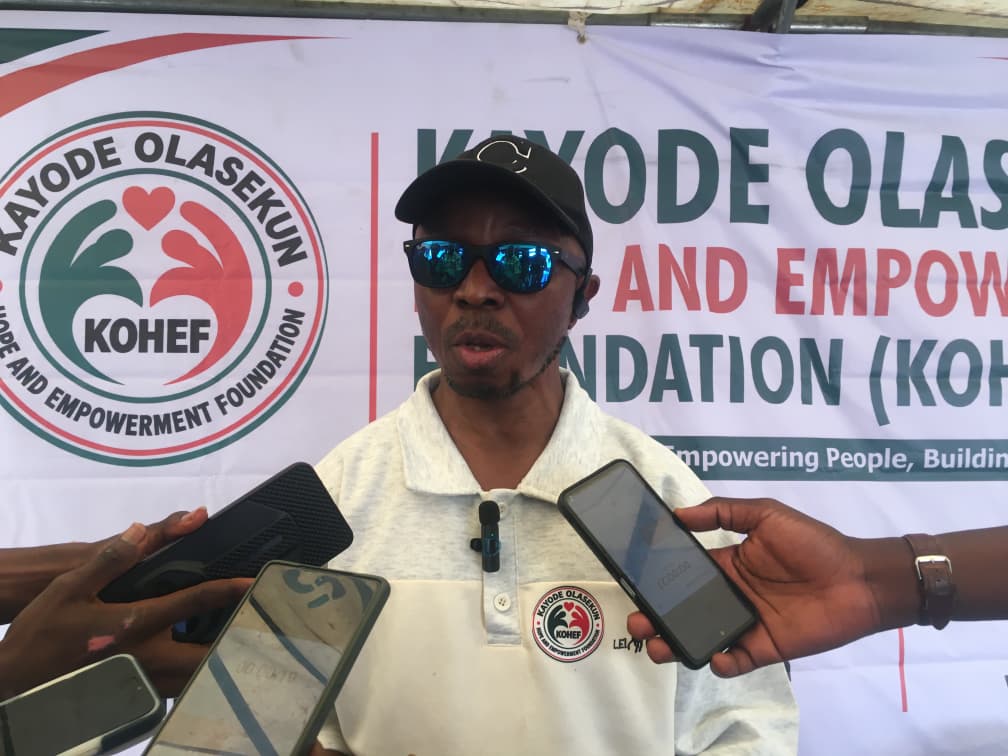
An Isan-Ekiti-born philanthropist and humanitarian advocate, Kayode Olasekun, has extended a hand of support to vulnerable residents in Ado-Ekiti, Ekiti State, through the distribution of palliatives aimed at alleviating economic hardship and bringing relief to less privileged members of society.
The intervention, facilitated through his foundation called Kayode Olasekun Hope and Empowerment Foundation (KOHEF), was designed to support vulnerable individuals and households struggling with the prevailing economic challenges, while reaffirming the importance of compassion, solidarity and community-driven humanitarian efforts.
Speaking with journalists at the distribution ceremony held in Ado-Ekiti, Olasekun, a healthcare professional, counsellor, former public servant and media practitioner, said his passion for humanitarian service was inspired by his personal experiences and the challenges he had encountered in life.
He explained that having benefited from God’s grace, mercy and considered it a responsibility to extend similar kindness to others who might be going through difficult times.
Olasekun also emphasised the need to pay particular attention to victims of kidnapping, noting that their recovery should go beyond physical rescue to include psychological and emotional rehabilitation.
According to him, many victims continue to battle trauma, depression and emotional distress long after regaining their freedom, making timely intervention and community support essential to their recovery.
He said his professional experiences across the Federal Public Service, healthcare sector and journalism had exposed him to the realities of human suffering and the psychological effects of traumatic experiences.
The philanthropist maintained that offering support to rescued victims could restore their confidence and give them a renewed sense of belonging.
“The driving force is not far-fetched. It is because I am also a child of grace and a product of God’s mercy. I have passed through a lot of challenges in life, and I understand what it means to struggle.
“Looking at society today, I know that many of the people out there may be experiencing similar challenges to those I have encountered in my own life. I believe that whatever little contribution I can make to improve their lives will mean a lot to them.
“People who have been kidnapped and subsequently rescued need support, particularly in terms of their psychological well-being and recovery. We all understand what victims go through after such traumatic experiences.
“Reaching out to them at this critical period can make a significant difference. It makes them happy and gives them a sense of belonging. When you make people happy, make them feel relevant and reassure them that they can rebuild their lives, it gives them hope”.
On the prevailing economic hardship in the country, Olasekun urged the Federal Government to strengthen its social intervention programmes and introduce more effective measures to cushion the effects of its economic policies on ordinary Nigerians.
While expressing optimism that the administration of President Bola Tinubu meant well for the country, he said the government should have put adequate relief mechanisms in place before implementing the removal of fuel subsidy.
Using a medical analogy, he explained that patients undergoing surgery were usually given medication to manage pain before and after the procedure, stressing that similar considerations should have guided the implementation of major economic reforms.
“I believe the government should have made adequate provisions, facilities and support mechanisms available to cushion the effects of subsidy removal on Nigerians before implementing the policy,” he added.
Speaking on the foundation’s activities and future plans, Olasekun disclosed that the first edition of the humanitarian intervention was held in August 2026, adding that subsequent engagements would extend to communities affected by kidnapping incidents.
He revealed plans to visit Eda-Oniyo, to meet with victims of recent kidnapping incidents who had been rescued, with a view to offering them assistance and putting smiles on their faces.
Olasekun also disclosed plans to proceed to Igogo for an on-the-ground assessment of the situation in the community, particularly to ascertain the extent of the challenges confronting residents and identify areas where humanitarian assistance might be required.
