
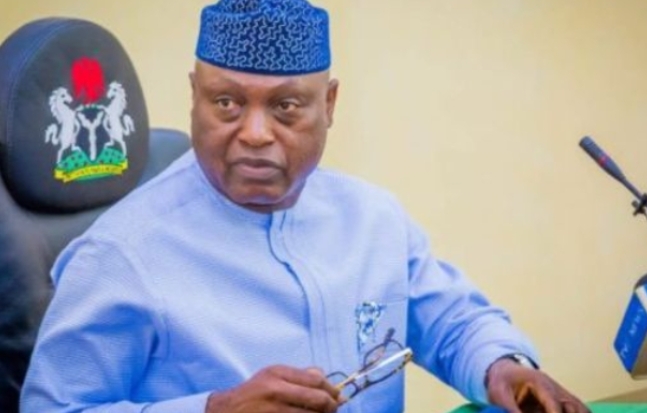
A Mandate Renewed, a Future Illuminated: Governor Biodun Oyebanji’s Architecture of Shared Prosperity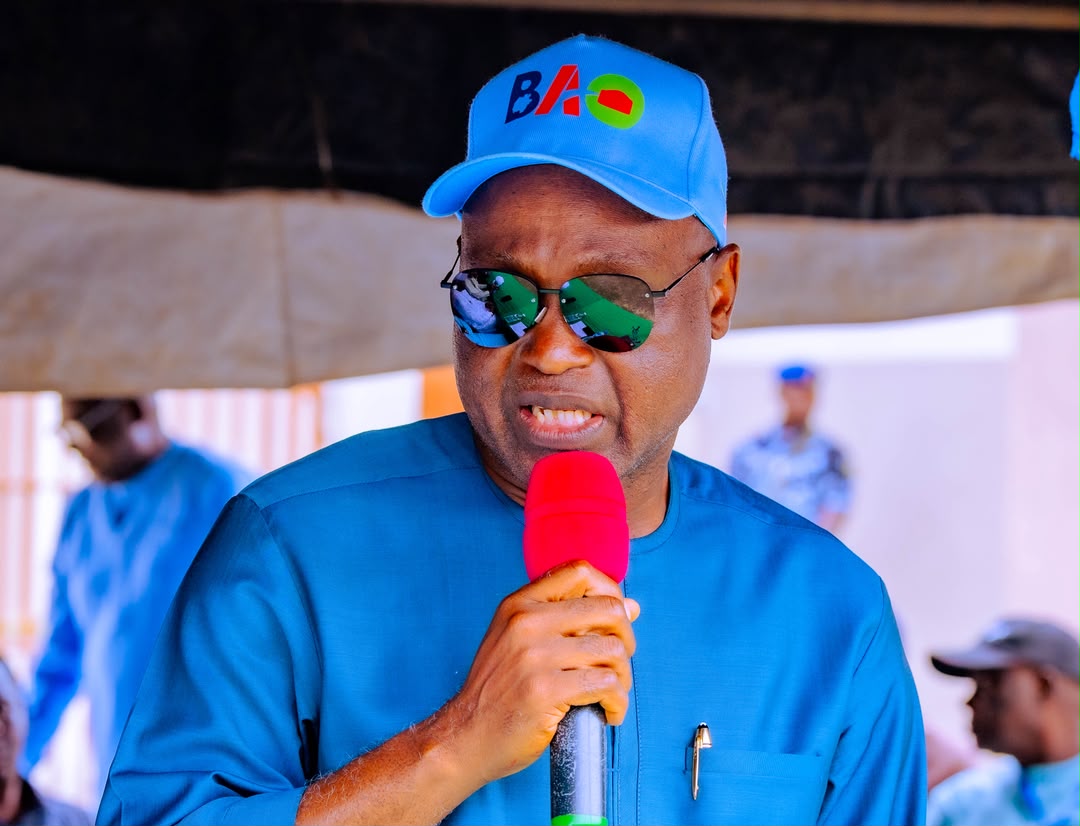
By Folorunso S. Aluko
The Fifth Meeting of the Ekiti State Executive Council in 2026 reveals a coherent governing philosophy: build infrastructure that expands opportunity, strengthen institutions that protect public value, and ensure that development reaches communities across the State.
From Electoral Confidence to a Development Covenant
When the Ekiti State Executive Council met at the New Governor’s Office in Ado-Ekiti on Monday, 13 July 2026, it did far more than approve contracts. It presented a carefully connected development blueprint through which Governor Biodun Abayomi Oyebanji is converting renewed democratic confidence into measurable public value.
The Council approved financial commitments totalling precisely ₦17,166,672,105.83 for renewable-energy street lighting, electricity infrastructure, strategic roads, rural road upgrades and a digital water and sanitation regulatory platform. It also advanced business-enabling reforms, fibre-optic deployment and the orderly succession of a traditional institution.
These decisions came as the Council congratulated Governor Oyebanji on his historic re-election – the first time a sitting Governor of Ekiti State has secured another mandate while in office. Yet the most meaningful response to victory was not prolonged celebration, but an immediate return to governance. The ballot confers authority; purposeful delivery converts authority into enduring legitimacy.
The approvals collectively express the six pillars of Governor Oyebanji’s Shared Prosperity Agenda: Governance; Youth Development and Job Creation; Human Capital Development; Agriculture and Rural Development; Infrastructure and Industrialisation; and Arts, Culture and Tourism. These pillars are formally embedded in the State’s development framework and linked to the Ekiti State Development Plan 2021–2050.
Solar Lighting and the Expansion of the Urban Economy
The approval of ₦381,650,327 for three solar-powered streetlight projects in Ado-Ekiti demonstrates an important understanding of urban development: a road does not attain its full social and economic value if it becomes unsafe or unproductive after sunset.
In Awedele Community, ₦125,439,084 will provide solar lighting along major roads, including the Enyo Filling Station–Textile Road, inner collector roads, the New Iyin Road corridor and the EKIRS–Oke Ori Omi–Okesa Overhead Bridge route. Another ₦58,739,075 will illuminate the rehabilitated roads at GRA Third Extension, off NTA Road, while ₦197,472,168 will provide lighting along the road linking Igirigiri Junction in Odo-Ado with the new Ado-Ekiti Local Government Headquarters.
Beyond beautification, these projects represent investments in security, road safety, renewable energy and the night-time economy. Properly illuminated communities encourage longer business hours, improve visibility for motorists and pedestrians, reduce opportunities for criminal activity and reinforce confidence in newly rehabilitated infrastructure.
The decision to execute the three projects through Direct Labour by the Ekiti State Electricity Board, with a three-month completion period, also reflects confidence in indigenous institutional capacity. Governor Oyebanji is showing that public agencies, when properly equipped and held accountable, can become effective instruments of timely and cost-conscious delivery.
Reliable Electricity as Social and Economic Infrastructure
The Council’s ₦337,658,297.65 electricity package connects power supply directly to healthcare, education, community security and economic productivity.
At Oke-Oniyo Community in the Oke Bola axis of Ado-Ekiti, ₦52,480,686.76 will replace an overloaded and damaged 300kVA transformer with a 500kVA transformer. At the Ekiti State University Teaching Hospital, ₦58,562,044 will replace the damaged 500kVA transformer with a 1MVA transformer, strengthening electricity supply to the Emergency Unit, Intensive Care Unit and Maternity Ward. Here, electricity is not merely an amenity; it is an essential component of patient safety and medical effectiveness.
The sum of ₦142,988,441.26 will extend electricity to the Command Academy, Ikogosi-Ekiti, through a dedicated 500kVA transformer and associated high- and low-tension networks. Meanwhile, ₦83,627,125.63 will finance the relocation of the problematic section of the Ado–Ilawe 33kV network between Fresh Water School and Crown Polytechnic Junction. The intervention will improve supply reliability in Ilawe, Erijiyan, Ikogosi, Igbara-Odo, Aramoko and Ijero.
To electrify a school is to improve learning; to power a hospital is to protect life; and to restore electricity to a community is to revive enterprise. All four projects will be delivered by the Ekiti State Electricity Board through Direct Labour within three months, again marrying institutional competence with clearly defined delivery timelines.
Roads as the Geography of Opportunity
Road infrastructure received the largest share of the Council’s commitments because mobility lies at the heart of economic inclusion. Roads determine how quickly farmers reach markets, tourists reach destinations, children reach schools and patients reach healthcare facilities.
The Council approved ₦12,576,107,119.84 for the reconstruction of the 18.83-kilometre Ilawe–Erijiyan–Ikogosi Road. Linking Ekiti South-West and Ekiti West Local Government Areas, the corridor will support the movement of people and goods, improve security and provide easier access to the Ikogosi Warm Springs Resort and other tourism assets. Messrs. Dromo International Company Limited will execute the project within 16 months, with payments tied to agreed milestones- a mechanism that properly connects public expenditure to verified performance.
A further ₦1,733,293,611.34 was approved for the 2.24-kilometre Spotless–Assembly of God/Opposite Olaoluwa Muslim Grammar School Road in Ado-Ekiti. Awarded to Messrs. Garden of Mercy Engineering Limited as the most responsive bidder following a competitive selective tendering process, the project will address extensive pavement failure, reduce travel time and ease transportation difficulties within 12 months.
The administration also approved ₦2,063,000,250 to strengthen 61.94 kilometres of roads under the Rural Access and Agricultural Marketing Project. Asphalt thickness will be increased from 30 millimetres to 40 millimetres—a one-third increase—after construction-stage assessments revealed traffic volumes substantially above the original projections.
The upgrade covers the 11.31-kilometre Ijero–Epe–Araromi–Iropora Road, at a variation cost of ₦382,839,750; the 19.8-kilometre Ikole–Isaba–Ikoyi–Igbemo Road, at ₦653,191,500; the 15.1-kilometre Ido–Ipere–Iludun Road, at ₦505,486,500; and the 15.73-kilometre Agbado–Ijisun–Ipole–Ise Road, at ₦521,482,500. The respective original contractors will undertake the additional works within seven months in accordance with the Ekiti State Public Procurement Law.
Altogether, the road decisions commit ₦16,372,400,981.18 to 83.01 kilometres of infrastructure- 21.07 kilometres of construction and reconstruction, and 61.94 kilometres of durability upgrades. The adjustment of the RAAMP specifications is particularly instructive. It represents adaptive governance: the willingness to respond to evidence, protect public investment and build for actual rather than assumed demand.
Digital Water Governance in the Service of Public Health
The approval of ₦74,962,500 for the Ekiti State Water and Sanitation Regulatory Data Management System, known as EK-WASREDAMS, demonstrates that infrastructure is not only physical. Digital systems that improve regulation, transparency and public responsiveness are equally important foundations of development.
The platform will create a central repository for regulatory records and automate permits for water abstraction, drilling and wastewater discharge. It will also provide real-time compliance monitoring, water-quality surveillance, early detection of public-health risks, a citizen complaints portal and an integrated digital payment system.
Developed under the World Bank-supported Sustainable Urban and Rural Water Supply, Sanitation and Hygiene Programme, EK-WASREDAMS will strengthen the Ekiti State Water and Sanitation Regulatory Agency’s ability to protect consumers and enforce standards.
Messrs. Forthwill Nigeria Limited emerged as the most responsive bidder after a competitive technical and financial evaluation involving the Bureau of Public Procurement and EK-WASRA. Its three-month completion period reinforces the administration’s emphasis on defined deliverables. Digital government acquires meaning when technology produces safer water, quicker services, stronger accountability and a more responsive relationship between citizens and the State.
Business Reform and Ekiti’s Emerging Digital Highways
By approving the 2025 Business Enabling Reform Action Plan Progress Report, Governor Oyebanji’s administration is acknowledging that investors require more than incentives. They require predictable regulation, institutional efficiency, transparency, connectivity and confidence that government commitments will be honoured.
Prepared by the Ekiti State Development and Investment Promotion Agency in collaboration with relevant ministries, departments and agencies, the report has been reviewed and cleared by the Presidential Enabling Business Environment Council Secretariat. Its publication by 31 July 2026 will position Ekiti State to qualify for performance-based financing under the 2026 State Action on Business Enabling Reforms Programme.
The Council also constituted an Inter-Ministerial Committee on Fibre Optics Deployment, Communication and Usage. Chaired by the Commissioner for Infrastructure and Public Utilities, with membership drawn from Finance; Innovation, Science and Digital Economy; and Health, the committee will coordinate policies for accelerated fibre-optic deployment and productive utilisation.
In the twenty-first century, fibre-optic networks are digital highways. They carry commerce, innovation, healthcare information, educational resources and government services. Their deployment can lower business costs, attract technology investment and create opportunities for young people. The Presidency has similarly linked SABER to transparent regulation, digital and physical infrastructure, investment attraction and job creation under the Renewed Hope Agenda.
Culture, Law and Grassroots Legitimacy
The appointment of Prince Fagbayi Feyisayo Ige as the Olumojo of Imojo-Ekiti in Oye Local Government Area adds an important cultural and institutional dimension to the Council’s decisions.
Following the passing of Oba Olatunji Samuel on 29 January 2024, the Fabunmi Ruling House—being the next entitled ruling house under the registered Chieftaincy Declaration—presented three eligible princes. Following traditional consultations, including Ifa divination, the six kingmakers unanimously selected Prince Fagbayi Feyisayo Ige.
The Council’s approval, pursuant to the Chiefs Law, Cap. C5, Laws of Ekiti State, 2012, and its authorisation of a Legal Notice in the State Gazette demonstrate that modern law and cultural tradition need not be rivals. Law gives order and public legitimacy to tradition, while tradition provides continuity, identity and community cohesion.
Governor Oyebanji deserves commendation for respecting both statutory requirements and established cultural procedures. Traditional institutions remain indispensable partners in grassroots governance, dispute resolution, peace-building and community mobilisation.
Due Process as Development’s Warranty
What distinguishes these approvals is not merely their financial value, but the governance architecture behind them. Direct Labour was adopted where the Ekiti State Electricity Board possesses demonstrated competence. Competitive procurement produced the most responsive bidders for other projects. Payments on the Ilawe–Erijiyan–Ikogosi Road are tied to milestones, while RAAMP variations respond to technical evidence and comply with procurement law.
The projects also carry specific completion periods of three, seven, 12 and 16 months. These are important indicators of a government concerned not only with announcing projects, but with completing them.
Due process is not a bureaucratic obstacle to development; properly applied, it is development’s warranty. It protects public resources, strengthens construction quality and preserves citizens’ confidence. Governor Oyebanji’s calm, consultative and institution-led leadership reflects an understanding that sustainable progress depends on systems that can outlive individual officeholders.
His emphasis on prudence, transparency, reforms and measurable delivery presents a compelling model of progressive leadership- firm in purpose, humane in outlook and attentive to both present needs and future generations.
Shared Prosperity within the Renewed Hope Vision
These Ekiti decisions give practical, subnational expression to President Bola Ahmed Tinubu’s Renewed Hope Agenda. The Federal Government’s eight priorities include inclusive economic growth, security, agriculture, sustainable energy, infrastructure and transportation, health and education, digitisation and effective governance.
The same alignment is evident in the APC’s Manifesto which places power, transportation, agriculture, healthcare, digital transformation, culture, institutional reform and accountable government at the centre of progressive development.
The correspondence is substantive. Solar lighting advances sustainable energy and security. Electricity projects support healthcare, education and enterprise. Rural roads strengthen agriculture and market access. The Ikogosi corridor integrates infrastructure with tourism. EK-WASREDAMS advances digital government and public health, while BERAP and fibre-optic deployment promote investment, innovation and jobs.
This is progressive federalism at work: a national vision translated into the geography and everyday realities of communities. Governor Oyebanji’s Shared Prosperity Agenda does not merely echo Renewed Hope; it localises it, giving the national progressive philosophy visible expression in Ekiti neighbourhoods, institutions and rural economies.
From Historic Victory to an Enduring Legacy
Governor Biodun Abayomi Oyebanji’s historic re-election enlarges both opportunity and responsibility. Its enduring meaning will not be found only in electoral records, but in completed roads, illuminated neighbourhoods, reliable hospital electricity, safer water, connected businesses and rural communities with easier access to markets.
The task ahead is disciplined implementation: enforcing milestones, publishing progress, maintaining completed assets, sustaining citizen engagement and ensuring that every approved naira produces commensurate public value.
Governor Oyebanji now stands at the meeting point of history and responsibility. If the prudence, inclusiveness, institutional reform and delivery focus reflected in these Executive Council decisions are sustained, Ekiti’s renewed mandate will become far more than a political milestone. It will become the foundation of an enduring legacy- a safer, better-connected, investment-ready and increasingly prosperous Ekiti in which shared prosperity is not merely promised, but progressively experienced by all.
Folorunso S. Aluko writes from Irare, Oye- Ekiti