
JKF at 61: The Courage to Build, the Wisdom to Serve – A Birthday Tribute to HE Dr John Kayode Fayemi, CON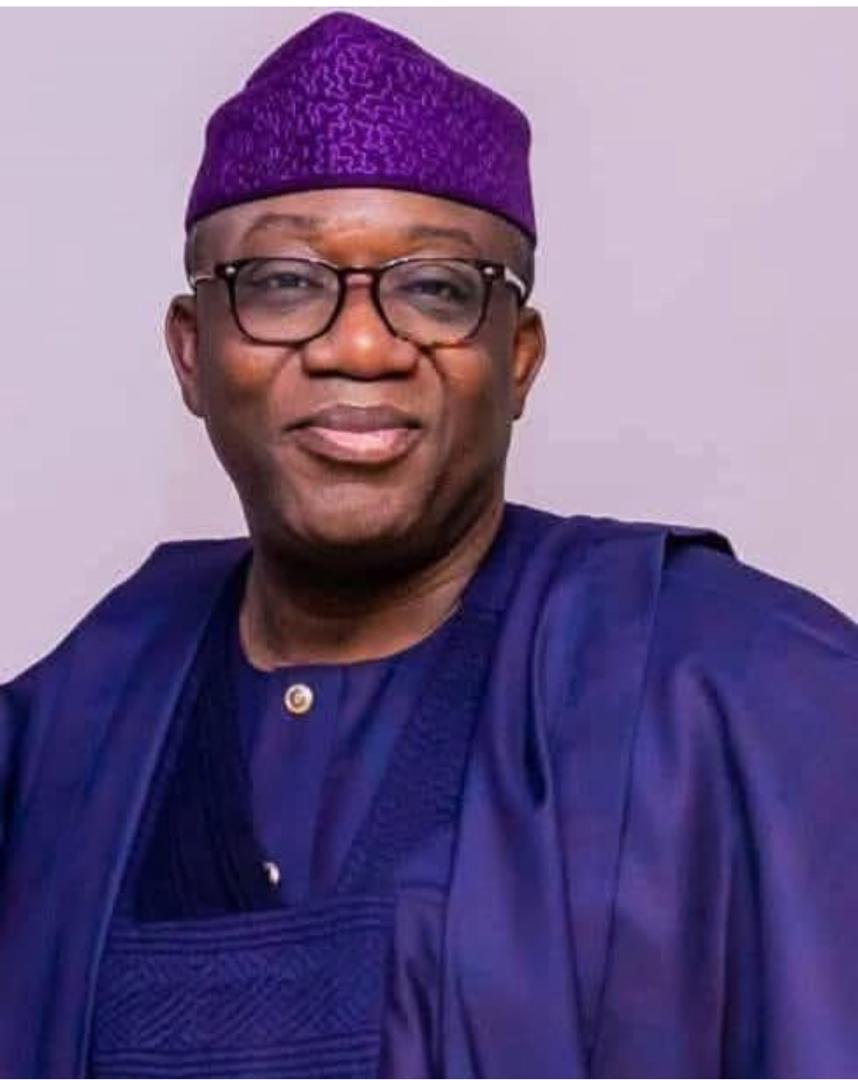
Some lives feel like footnotes to history; others read like a living argument for what society can become. HE Dr John Olukayode Fayemi (JKF), CON, born 9 February 1965, belongs firmly to the second tradition: the lineage of leaders whose public service is anchored not merely in ambition, but in ideas, conscience, and an uncommon fidelity to the common good.
As JKF marks his 61st birthday today, 9 February 2026, it is fitting to honour him as a development expert and pro-democracy activist, a governor who twice carried the responsibilities of Ekiti State, a reform-minded federal minister, and a consensus builder who led Nigeria’s governors in a challenging national period. Yet beyond offices held, JKF represents something deeper: the possibility that politics can be intelligent without being cold; principled without being rigid; strategic without being cynical.
JKF’s story begins in Ibadan, with Ekiti roots in Isan-Ekiti, Oye Local Government Area. His formation reflects a steady investment in learning- studies across Nigerian universities and advanced training abroad, culminating in a doctorate in War Studies at King’s College London (1994), specialising in civil-military relations. That scholarly grounding matters: it shaped a leader attentive to institutions, governance design, and the hard questions of statecraft, how to keep power accountable, how to keep coercion under law, how to secure freedom in fragile democracies.
But it is not enough to understand democracy; one must sometimes fight for it. In the 1990s, as Nigeria grappled with military rule and the long shadow of the June 12 crisis, JKF emerged in the pro-democracy ecosystem, part of the civic energy that insisted Nigeria must be governed by ballots, not decrees. Accounts of his role in the diaspora-facing democracy movement, including links to NADECO abroad and the broader pro-democracy information struggle, underscore a defining feature of his life: he did not enter politics as a spectator; he entered it as a participant in the moral contest for Nigeria’s future.
That same civic impulse informed his later work as Founding Director of the Centre for Democracy and Development (CDD), serving for nearly a decade, strengthening research, advocacy, and democratic capacity across West Africa. CDD’s decision to name a building in his honour is not merely commemorative; it is an institutional acknowledgement that his leadership helped set standards for governance work rooted in evidence, courage, and public interest.
Politics often tests whether an activist can govern; governance tests whether an intellectual can deliver. JKF did both- serving as Governor of Ekiti State (2010–2014) and again (2018–2022). Across both administrations, his style was recognisable: policy-first, institution-minded, and development-driven.
A signature illustration is Ekiti’s Social Security Scheme for youths, women, and indigent elderly citizens, an intervention that carried both philosophical and practical weight. In 2012, he signed the enabling law, framing support for the vulnerable not as charity but as a duty of a humane state, a public declaration that development must be measured not only in roads and buildings, but also in dignity preserved.
This is what distinguishes transformative governance from performative governance: the willingness to invest political capital in policies whose chief beneficiaries may not control political structures, but whose lives are sacred in the moral arithmetic of leadership.
Beyond specific programmes, his broader approach to Ekiti governance reflected the belief that society progresses when institutions outlive individuals- when budgeting, service delivery, education systems, and social policy are strengthened beyond personalities. And if politics is ultimately a contest of narratives, JKF’s narrative has consistently been: “Development is not a slogan; it is the patient work of building capacity, trust, and outcomes.”
As Minister of Solid Minerals Development (2015–2018), JKF brought a development economist’s sensibility to a sector Nigeria long described as “full of potential” but often short of coherent execution.
A major marker of that period was the articulation of a Mining Growth Roadmap (2016)- a structured policy framework aimed at repositioning mining to contribute more meaningfully to jobs, investment, and revenue diversification. The Roadmap’s value was not only in its targets, but in its central message: resources do not develop countries; governance develops countries, through clarity, regulation, incentives, transparency, and investment in institutions that make value creation possible.
In a national economy historically dependent on oil cycles, his leadership at the ministry helped strengthen the national conversation that diversification is not optional, it is survival.
In May 2019, Nigeria’s governors elected JKF as Chairman of the Nigeria Governors Forum (NGF). That office is uniquely demanding: it requires balancing partisan differences, state interests, constitutional sensitivities, and national emergencies, while maintaining the Forum as a credible platform for subnational governance.
His NGF era became synonymous with coordination and calm authority, with a focus on intergovernmental engagement and the role of states in national development outcomes. It takes a particular temperament to lead peers, especially peers who are themselves powerful political actors. JKF’s strength here has always been the ability to combine ideas with diplomacy: to persuade without grandstanding, to negotiate without weakening principles, and to keep governance conversations tethered to practical solutions.
Dr Fayemi’s continental relevance has also been affirmed through his emergence as President- and pioneer President- of the Forum of Regions of Africa (FORAF), elected on 9 September 2022 in Saïdia, Morocco. This pan-African platform, linked to regional and subnational governments across the continent, positions him to help shape the future of decentralisation, regional cooperation, and people-centred development in Africa, extending his lifelong commitment to democratic governance beyond Nigeria and into the wider arena of continental progress.
It is often said that leadership is what you do when no one is watching. In JKF’s case, those who have observed him closely recognise a man whose public life is animated by a private ethic- reverence for God, discipline of conscience, and a temperament that values human dignity.
His Catholic devotion is not merely ceremonial; public reflections on his early service at the altar and his visible participation in Catholic worship speak to a spirituality that prizes humility, gratitude, and service. In a time when power can easily harden hearts, this inner grounding has helped preserve what many cherish in him: a kind heart, an open door, and a steady commitment to people.
On this milestone, I also speak personally. My work with JKF was a training platform- a living school of governance and leadership. In his proximity, one learned that administration must be anchored in purpose; that decisions must be made with both compassion and competence; that public service is not theatre but stewardship. His continued love and support for me remain deeply valued and appreciated- proof that true leaders do not only build policies; they build people.
At 61, Dr Fayemi’s journey reminds us of an enduring truth: politics is temporary, but impact is permanent. Titles fade; institutions remain. Applause ends; outcomes endure. And a nation is better when its leaders understand that the highest form of power is not domination but service shaped by wisdom.
Your Excellency, as you celebrate today, I pray that the Almighty God grants you many more years in grace, renewed strength, deep peace, and excellent health. May your days be filled with joy, your path be illuminated with divine wisdom, and your service to humanity increase in scope and fruitfulness. May God continue to reward your sacrifices for democracy, development, and the dignity of people.
Happy 61st Birthday, HE Dr John Kayode Fayemi, CON.
Folorunso S. Aluko
Director General
Progressive Governors Forum